Events & Festivals
Switzerland's Seasonal Festivals: When to Go, What to Pay, Whether to Bother
From the pre-dawn silence of Basel Fasnacht's Morgestraich to the lakeside stages of Montreux in July, Switzerland's festival calendar rewards the well-prepared traveller. Here is our honest, independent assessment of what each event is actually like — crowds, cost, and all.
Basel Fasnacht — The Morgestraich and Three Wild Days
Basel Fasnacht begins at exactly 04:00 on the Monday after Ash Wednesday, which makes it unique in the Christian world: it starts after, not before, Lent. At that precise moment, every electric light in Basel's old town is extinguished and thousands of masked, lantern-carrying drummers and piccolo players step out of the darkness. The sound is unlike anything else in Europe — a dense, layered mass of drumming that fills narrow mediaeval streets for hours. This is the Morgestraich, and it is genuinely one of the most extraordinary things you can witness in Switzerland.
The full carnival runs for exactly 72 hours — Monday morning to Thursday morning — with Cortège parades on Monday and Wednesday afternoons, and the Schnitzelbängg (satirical verses about local politicians, sung in Baseldytsch dialect) in the evenings. Admission to all street events is free. Grandstand seats for the Cortège run CHF 30–60 and must be booked months ahead. The experience on the street is superior anyway: the guggenmusik bands play directly to bystanders, and the atmosphere is inclusive and chaotic in equal measure. Plan your accommodation in Basel at least four to six months in advance — the city fills to capacity. Combine a Fasnacht trip with a visit to the Fondation Beyeler in Riehen, which remains open throughout the carnival period.
Is it worth the crowds?
Yes, unambiguously — but only if you commit to the Morgestraich itself. Arrive in central Basel by 03:30, dress warmly (February nights are cold), and position yourself on Marktgasse or Freie Strasse. The procession lasts until around 06:30, after which the city serves Mehlsuppe (flour soup) and Zwiebelwähe (onion tart) as traditional Fasnacht breakfast. The afternoon parades on Monday and Wednesday are colourful and family-friendly, but the midnight magic belongs entirely to the opening hour.
Montreux Jazz Festival — July on Lake Geneva
The Montreux Jazz Festival runs for sixteen days in early-to-mid July along the eastern shore of Lake Geneva, roughly equidistant between Lausanne and Villeneuve. Despite the name, the programme ranges far beyond jazz: soul, blues, pop, electronica, hip-hop and world music all appear on the bill. The festival was founded in 1967 by Claude Nobs and has hosted Miles Davis, Nina Simone, David Bowie and Prince, among many others. The Auditorium Stravinski holds 4,500 people and is the main ticketed indoor venue.
The free lakeside stages — Scène du Lac and various pop-up spots along the promenade — run from approximately 17:00 to midnight every evening and attract tens of thousands of people nightly. This is genuinely excellent programming at no cost: in recent years the free stages have featured internationally recognised artists as warm-ups and late-night club acts. Tickets for indoor concerts range from CHF 45 for smaller club stages to CHF 120–180 for headline Auditorium shows; all-day indoor passes cost CHF 90–130. Book online at montreux-jazz.com as soon as the programme is announced, usually in April.
Montreux is most easily reached by train from Geneva (45 minutes, CHF 24 one-way) or Lausanne (20 minutes, CHF 10). The town itself is small and accommodation is expensive during festival weeks — consider staying in Vevey or Lausanne and commuting by train. The promenade is flat and accessible by wheelchair. After the festival, the eastern shore of Lake Geneva is wonderful for walking along the Lavaux UNESCO vineyard terraces between Montreux and Lutry.
Lucerne Festival — Classical Music Against an Alpine Backdrop
Three seasons, one city, and a concert hall that sits directly on the water: the Lucerne Festival is the most prestigious classical music event in Switzerland and one of the most important in Europe.
The Lucerne Festival runs across three annual editions: the main summer festival (mid-August to mid-September), a shorter Piano festival in November, and an Easter festival in March or April. The summer edition draws conductors and soloists of the highest calibre — recent seasons have included Riccardo Chailly, Mirga Gražinytė-Tyla, and the Vienna Philharmonic. The KKL Luzern concert hall, designed by Jean Nouvel and opened in 1998, is regarded as one of the finest acoustic spaces in the world; it stands directly on the shore of Lake Lucerne with the mountains visible through its glass facade.
Ticket prices for main-stage orchestral concerts run CHF 40–220 depending on programme and seat. Chamber music and recital events in smaller KKL spaces are CHF 25–80. The festival also programmes a number of free outdoor events in front of the hall and around the old town. Lucerne itself is one of Switzerland's most visited destinations, so accommodation during the August festival requires planning well in advance. Combine the festival with a day trip on the Pilatus or Rigi mountain railways, both accessible from Lucerne's central waterfront within an hour.
Alpabzug — The Autumn Cattle Descent
The Alpabzug is less a scheduled festival than a seasonal agricultural reality that happens to be extraordinarily photogenic. From mid-September through mid-October, farms throughout the Alps bring their herds down from high summer pastures before the first serious snowfall closes the upper paths. The cows are decorated with large flower headdresses and clanging cowbells; herdsmen wear traditional embroidered dress; and the processions move at the unhurried pace of animals that have spent four months above 1,500 metres eating grass.
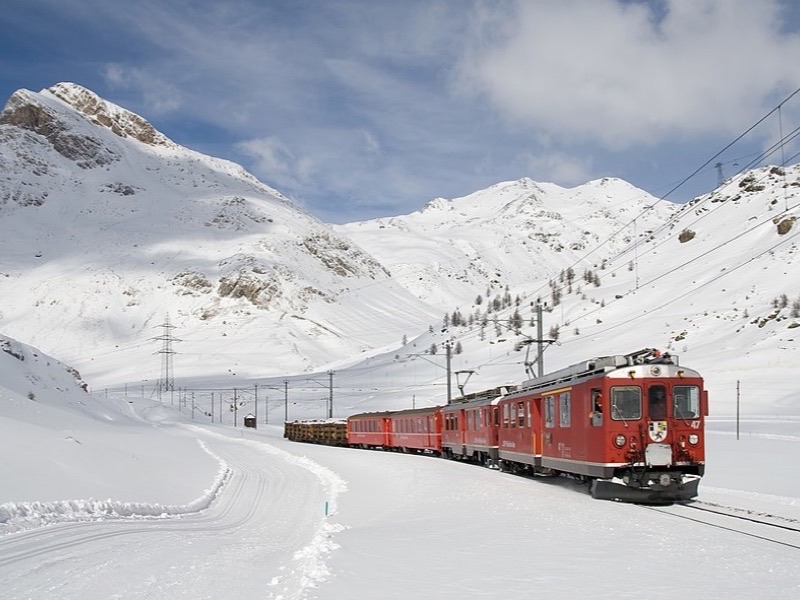
The most accessible Alpabzug events for visitors are in the Appenzell region (Appenzell Innerrhoden and Ausserrhoden), the Bernese Oberland around Grindelwald, Wengen and Mürren, and the Entlebuch biosphere reserve south of Lucerne. The Appenzell descents are often accompanied by music and a street market in the village; the Bernese Oberland ones are quieter and more purely agricultural. Entry to the public roads and village squares is free. Good viewpoints can be reached on foot or by the narrow-gauge trains from Interlaken Ost to Grindelwald or from Appenzell village. Exact dates vary year to year — the best source is the local tourism office of the relevant canton, checked in August or early September.
The Engadine and Swiss National Park area also sees its own quieter version of the livestock descent, and the autumn colours in the larch forests make this one of the most visually rewarding times to walk there. If travelling with children, the cattle procession is reliably fascinating for under-tens; see our notes in the family attractions guide.
Sechseläuten — Zürich's Spring Guild Festival
Sechseläuten (literally "six o'clock ringing") takes place on the third Monday of April in Zürich and marks the symbolic end of winter. The name refers to the bells of the Grossmünster and Fraumünster that ring at 18:00 — the moment the working day officially extended to six o'clock with the longer spring evenings, in a tradition dating to the Middle Ages. Today the festival is organised by Zürich's 26 guilds, whose members parade through the city in elaborate historical costumes representing their trades: the tanners, the tailors, the wine merchants, the carpenters.
The parade begins at 15:00 on the western bank of the Limmat and winds through Bahnhofstrasse, Paradeplatz and along the lake to Sechseläutenplatz. Children dressed in costume — the Kinderumzug — parade on the preceding Sunday, which is a charming and less crowded event worth catching. At exactly 18:00 on Monday, the Böögg — a cotton-wool snowman stuffed with fireworks — is placed atop a large bonfire and ignited by a mounted member of the Zunft zur Constaffel. The crowd times how long it takes for the Böögg's head to explode: fewer than ten minutes is said to predict a fine summer. The whole spectacle is free to watch; secure your position on Sechseläutenplatz by 17:00. Combine with an evening walk along the Zürich old town and Lindenhügel after the bonfire has subsided.
Christmas Markets — Basel, Zürich and Montreux
Switzerland runs three Christmas markets that stand clearly above the rest in scale, atmosphere and quality of craft goods. Basel's Weihnachtsmarkt on Barfüsserplatz and Münsterplatz is the largest in Switzerland and one of the oldest in Europe, running from late November through Christmas Eve. The two squares hold approximately 180 market stalls and are surrounded by the city's Gothic and Romanesque architecture. Entry is free; expect to spend CHF 8–12 on a Glühwein or hot Punsch, and CHF 15–40 on artisan gifts. Combine with a morning visit to the Kunstmuseum Basel, ten minutes' walk away.
Zürich's most distinctive Christmas offering is inside the Hauptbahnhof: the Christkindlimarkt beneath the station's vaulted iron roof is decorated each year with a large overhead installation, and the combination of arriving trains, mulled wine and Christmas light is genuinely theatrical. A second outdoor market on Werdmühleplatz runs simultaneously. Both are free. The whole Zürich Christmas season runs from late November to 24 December and the old town streets are illuminated from 17:00 daily.
Montreux's Marché de Noël runs along the lakeside promenade from late November through Christmas Day. The backdrop of Lake Geneva and the snow-capped Dents du Midi makes this the most scenic of the three. The market is smaller than Basel — approximately 120 chalets — but the setting is unmatched. Montreux is accessible in 45 minutes from Geneva by train. All three markets are free to enter; budget CHF 30–60 per person for food, drink and light shopping over a half-day visit.
Swiss Festival Calendar — Month by Month
A practical reference table covering the events above plus additional seasonal highlights.
| Month | Event | Location | Typical Dates | Cost | Verdict |
|---|---|---|---|---|---|
| February / March | Basel Fasnacht (Morgestraich) | Basel old town | Monday after Ash Wednesday, 04:00 start; 72 hours total | Free (grandstand CHF 30–60) | Essential — book accommodation 6 months ahead |
| February / March | Engadin Skimarathon | St. Moritz to Zuoz | Second Sunday of March | CHF 90–130 to race; free to spectate | Spectacular spectator event even for non-skiers |
| April | Sechseläuten | Zürich | Third Monday of April | Free | Excellent; arrive by 15:00 for parade, 17:00 for bonfire |
| April | Lucerne Festival Easter edition | KKL Luzern | Easter weekend (dates vary) | CHF 35–180 per concert | Smaller than summer edition; easier tickets |
| June | Zürich Pride | Zürich | Third weekend of June | Free | Large and well-organised; city centre very busy |
| July | Montreux Jazz Festival | Montreux, Lake Geneva | First to third week of July (16 days) | Free (lakeside); CHF 45–180 (indoor) | Essential — free stages alone worth the trip |
| August | Zürich Street Parade | Zürich lakefront | Second Saturday of August | Free | One of Europe's largest techno events; not for everyone |
| August — September | Lucerne Festival (summer) | KKL Luzern | Mid-August to mid-September | CHF 25–220 per concert | World-class classical; book 3 months ahead |
| September — October | Alpabzug cattle descent | Appenzell, Grindelwald, Entlebuch | Mid-September to mid-October (weather-dependent) | Free | Unmissable if dates align — check local tourism boards |
| September | Zürich Wine Harvest (Zürich Wine Days) | Zürich old town | Late September | Free entry; CHF 5–12 per tasting glass | Pleasant; combine with old town walk |
| November | Lucerne Festival Piano edition | KKL Luzern | Mid-November (10 days) | CHF 30–120 per recital | Intimate; some of the best piano recitals in Europe |
| Late November — 24 December | Basel Christmas Market | Barfüsserplatz & Münsterplatz | Late November to 24 Dec | Free entry | Best in Switzerland for scale and atmosphere |
| Late November — 24 December | Zürich Christkindlimarkt | Hauptbahnhof & Werdmühleplatz | Late November to 24 Dec | Free entry | The indoor station market is architecturally theatrical |
| Late November — 25 December | Montreux Marché de Noël | Montreux lakefront promenade | Late November to 25 Dec | Free entry | Best setting of the three; lake and mountain backdrop |
Practical Planning Tips for Festival Travel
Use Rail Passes to Reduce Costs
Swiss Half Fare cards (CHF 120 for one month) halve rail fares to every festival city. Basel, Montreux, Zürich and Lucerne are all on the main SBB intercity network; no reservations required on most services. For intensive festival weeks, a seven-day Swiss Travel Pass (from CHF 244 second class) covers unlimited travel and is usually worth it. See our travel passes comparison for current pricing.
Compare passes
Book Early or Stay Outside the City
Basel during Fasnacht and Montreux during the Jazz Festival reach full capacity weeks in advance. For Basel, consider Freiburg im Breisgau (30 minutes by train across the German border) or Mulhouse in Alsace. For Montreux, Lausanne and Vevey offer excellent transport links and more availability. For the Lucerne Festival, Zug (20 minutes by train) or Küssnacht am Rigi are quieter and cheaper alternatives with easy access.
Ask for route advice
Layer Festivals with Landscape
Switzerland's festival calendar maps well onto its travel geography. Montreux Jazz in July pairs with a day on Lake Geneva by boat to Chillon Castle. The Lucerne Festival in August pairs with the Pilatus cog railway. Basel Fasnacht in February can be combined with a first snowshoe walk in the nearby Schwarzwald or Jura. The autumn Alpabzug is naturally paired with walks in the Engadine or Bernese Oberland while the larch forests are at peak colour.
Explore mountain railwaysFrequently Asked Questions
Most of Fasnacht is free and takes place on public streets. The Morgestraich parade itself requires no ticket — you simply stand on the pavement in the old town. A few ticketed grandstand areas exist for CHF 30–60, but the street experience is arguably better. Book accommodation six months ahead as Basel fills completely.
The lakeside promenade stages are free and run nightly throughout the festival in July. Indoor arena concerts (Auditorium Stravinski) start at CHF 45 for club nights and rise to CHF 120–180 for headline acts. Day passes covering all indoor stages cost CHF 90–130. Booking at least two months in advance is essential for major names.
The Alpabzug happens throughout September and October as farms bring their herds down from high alpine pastures before the first snowfall. The Appenzell and Bernese Oberland regions have the most photogenic descents. Grindelwald and Wengen typically see cattle coming down in late September; Appenzell events often fall on specific Saturdays between mid-September and mid-October. Check local tourism boards each year as exact dates shift with weather.
Basel's Weihnachtsmarkt on Barfüsserplatz and Münsterplatz is the largest, running from late November to Christmas Eve, free entry. Zürich's market at Hauptbahnhof is famous for its indoor installation inside the train station — magical and heated. Montreux's market along Lake Geneva is the most scenic, with mountain backdrop, running late November through December. All three are free to enter; budget CHF 8–15 for mulled wine and snacks per visit.
Sechseläuten is Zürich's spring guild festival held on the third Monday of April. The parade of guild members in historical costume begins at 15:00 and winds through the old town to Sechseläutenplatz by the lake. At 18:00 the Böögg — a snowman effigy packed with fireworks — is burned atop a bonfire. The faster the Böögg's head explodes, the better the summer, or so Zürich locals claim. Entry is free; arrive by 15:30 to claim a pavement spot.
Plan Your Festival Trip
Not sure which events fit your dates?
Tell us when you are travelling and what kind of experience you want — crowds or quiet, free or ticketed, city or mountain — and we will put together a route that catches the right moment in the right place.
Reach the team →