Protected wilderness
National Parks & Nature Reserves in Switzerland
From the strictly wild Engadine to the pastoral nature parks of Jura and Graubünden — Switzerland protects its most extraordinary landscapes with unusual seriousness. Here is what to expect, what the rules actually mean, and where the wildlife tends to be.
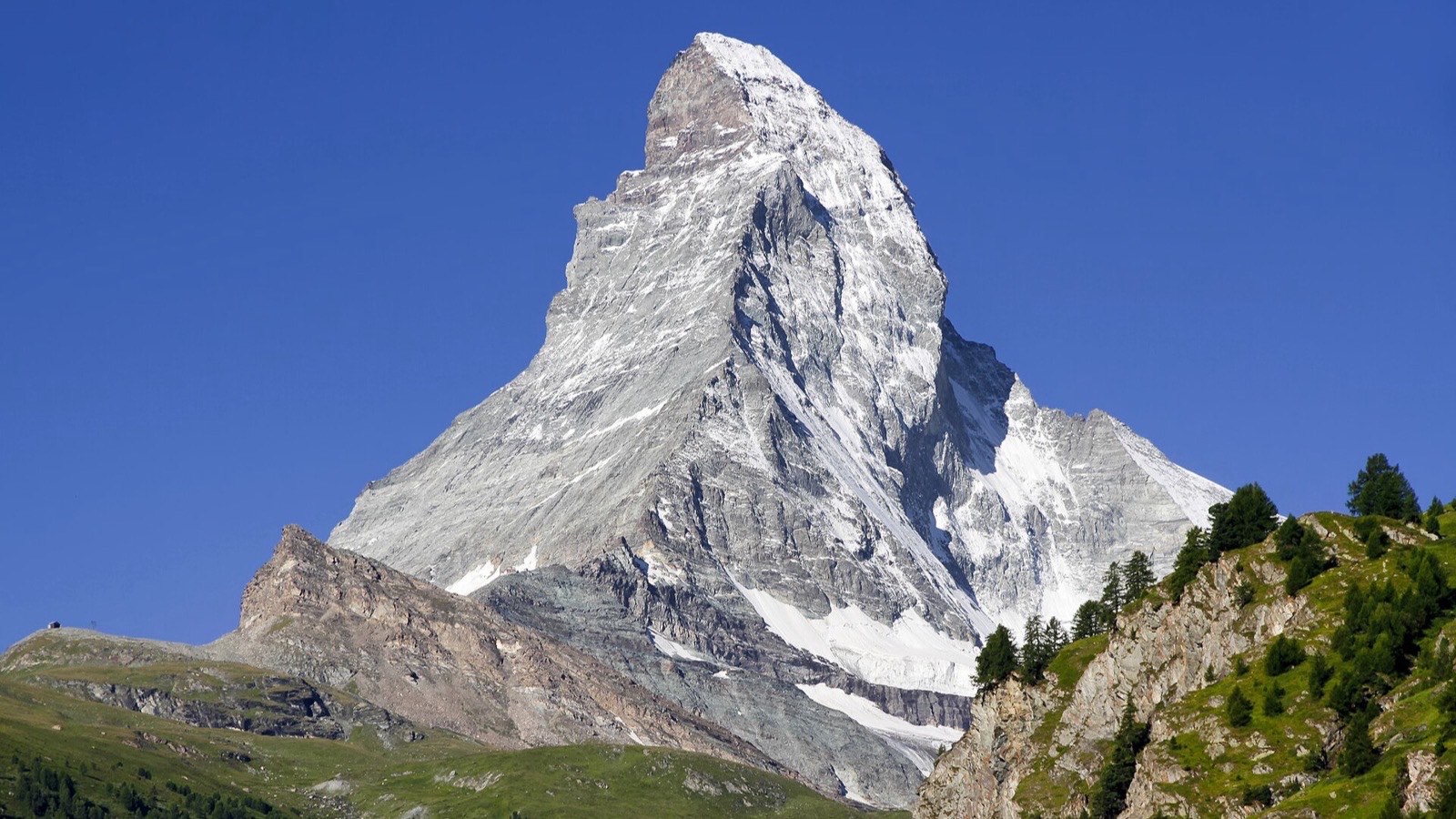
The Swiss National Park — Switzerland's only true wilderness
Established in 1914, the Swiss National Park in the Lower Engadine valley of Graubünden is not merely the oldest national park in the Alps but the only one in Switzerland to carry IUCN Category II strict-protection status. Covering roughly 170 square kilometres between the villages of Zernez, S-chanf and the Austrian border near Martina, the park is managed on a simple principle: absolute non-intervention. No tree is felled, no path is resurfaced beyond basic safety maintenance, no animal is culled, and no plant may be picked. The result, after more than a century of leaving the land entirely alone, is a landscape that surprises most visitors with its genuine wildness — dense forests of Swiss pine and larch draped in lichen, boulder-strewn river corridors carved by the Ova Spin and Spöl rivers, and open ridgelines where you are genuinely unlikely to meet another person even in July.
The park contains around 80 kilometres of marked hiking trails, all of which are open between late May and the end of October (snow permitting, some higher routes open later). Visitors are required to stay on the marked paths at all times — this is not advisory but legal. Rangers patrol regularly and fines are issued. Dogs are prohibited throughout the entire park without exception. Camping and open fires are forbidden. You may not remove anything from the park, including fallen wood, stones, mushrooms or berries. These rules sound strict on paper and they are — which is precisely why the park's wildlife populations are among the healthiest in Europe.
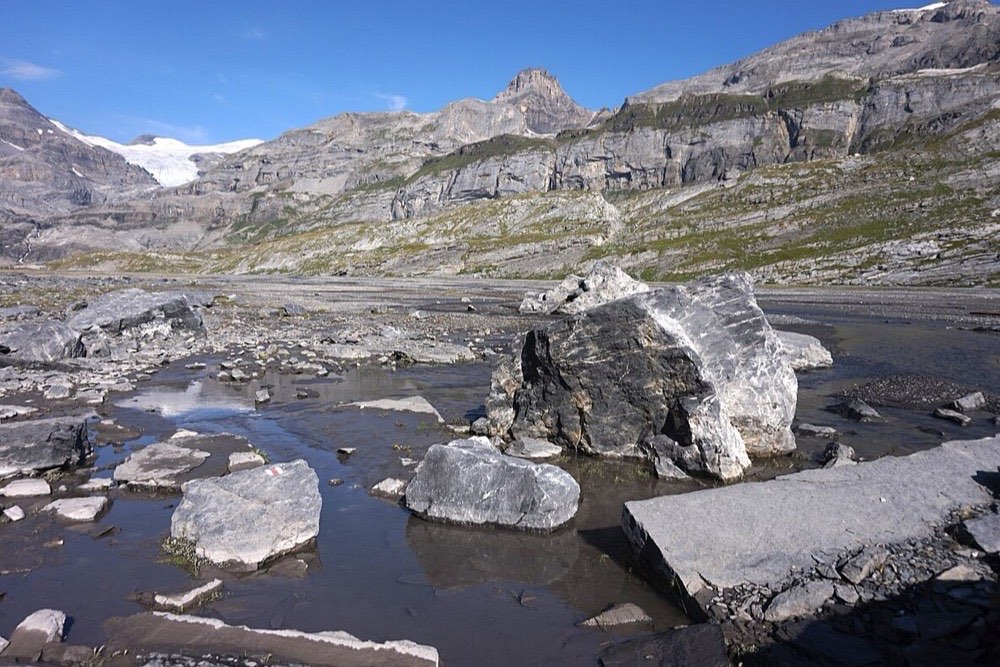
Key trails
Four trails worth planning around
These are our recommended routes across the park's main zones — each with a different character and different wildlife probabilities.
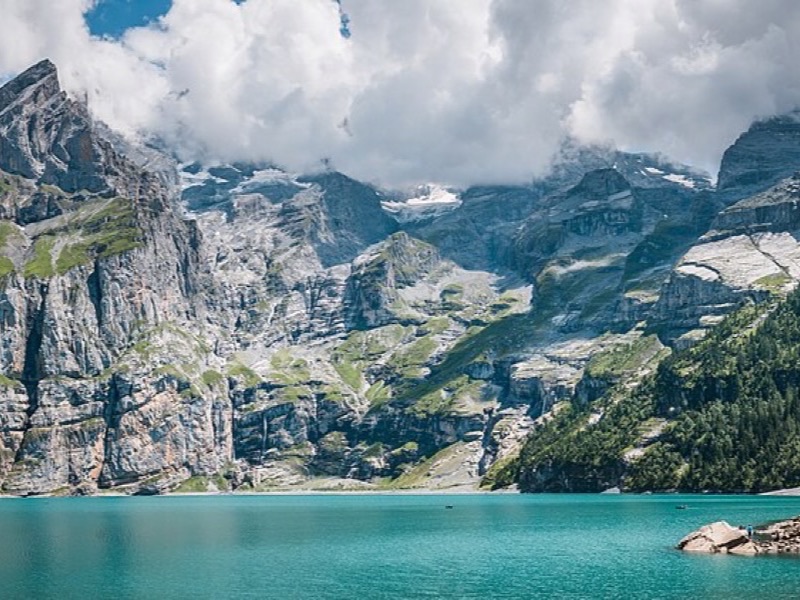
Margunet Panorama Loop
Starting from the Il Fuorn hotel and PostBus stop, this is the park's signature high-altitude circuit. The trail climbs steadily through dense Swiss pine forest before breaking above the treeline at around 2,300 metres on the Margunet ridge. The panorama here takes in the entire Spöl valley, the Ofenpass road far below and, on clear days, the Ortler group across the Italian border. Ibex are frequently seen on the eastern flanks of the ridge in the morning hours. The descent follows the Ova Spin river corridor, where red deer gather at dusk. Difficulty: T3 (mountain). No shuttle required.
Ask about guided options →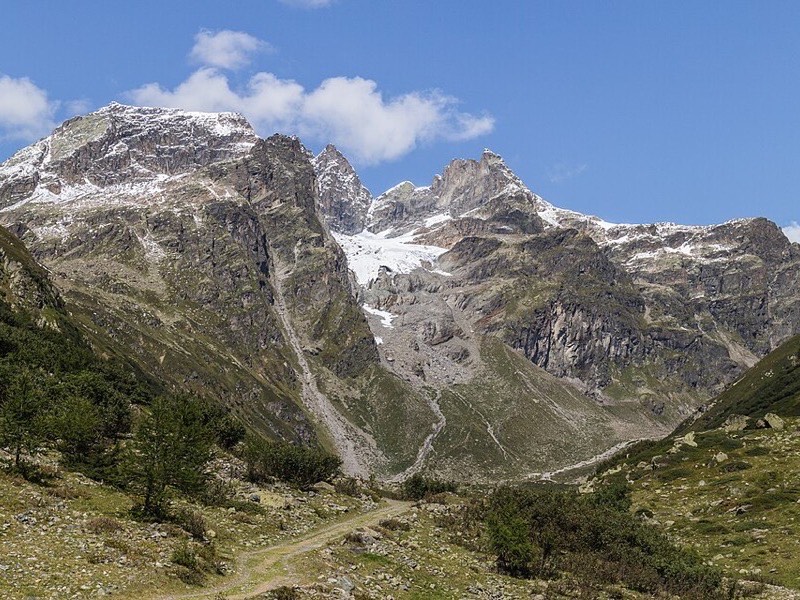
Val Trupchun — Red Deer Valley
Val Trupchun is widely considered the finest wildlife corridor in the Swiss Alps. The valley runs south from S-chanf into the heart of the park and shelters the highest concentration of red deer in Switzerland — an estimated 500 to 700 animals use the valley seasonally. September and October bring the rut, when stag calls echo off the cliffs at dawn in a genuinely extraordinary natural spectacle. The trail is flat-bottomed and technically straightforward (T2), making it accessible to most walkers. Binoculars are essential. The return to S-chanf can be made on the same trail or by continuing to Bufs and catching a PostBus back to Zernez.
Plan this route with us →
Cluozza Hut Traverse
The Chamanna Cluozza (SAC hut, bookings required, dormitory CHF 48 per person including breakfast) sits at 1,882 metres in the centre of the park and is the only accommodation permitted inside park boundaries. An overnight here means you experience the park at its quietest — at 5am the deer and marmots are completely unhurried. Day one: Zernez to Cluozza via the Ova da Cluozza gorge, approximately 4.5 hours. Day two: cross to Margunet ridge and descend to Il Fuorn, then PostBus to Zernez. Book the hut weeks in advance for July and August. Hut phone: +41 81 856 12 35.
See our travel pass options →
Ova Spin River Walk
For visitors with limited time or who prefer an easier outing, the riverside path along the Ova Spin from the Döss Radond car park (accessible by PostBus from Zernez, journey approximately 30 minutes) to the Punt la Drossa bridge delivers genuine park atmosphere without significant elevation. The gorge walls support dense spruce and larch canopy, otter signs are sometimes visible in the gravel banks, and the clarity of the water is remarkable. This is the best trail for families with older children. The PostBus returns from Punt la Drossa, making a shuttle straightforward. See our family attractions guide for more child-friendly options across Switzerland.
Get a route recommendation →Visitor information
Zernez National Park House — times and prices
The Nationalparkhaus in Zernez is the main visitor centre for the Swiss National Park and the natural first stop before entering the park. It houses a well-produced permanent exhibition on the park's geology, ecology and 110-year history of non-intervention management, with particularly good displays on the return of large predators and the succession of forest types since the early twentieth century. The building itself dates from the eighteenth century and has been sensitively converted; it shares a courtyard with the park administration offices where rangers are often available for informal advice on current trail conditions.
Allow 60 to 90 minutes for the full exhibition. The centre also operates a reference library, a well-stocked nature book and map shop, and a café serving coffee, soup and sandwiches. The 1:50,000 Swisstopo map sheet 259T (Ofenpass) is the appropriate map for the park and is sold at the desk for CHF 18. Trail booklets in English are available for CHF 5.
| Ticket category | Price (CHF) | Notes |
|---|---|---|
| Adult (17+) | CHF 10 | Standard entry |
| Senior / Student | CHF 7 | ID required |
| Child (6–16) | CHF 5 | Accompanied |
| Child under 6 | Free | — |
| Family ticket | CHF 25 | 2 adults + up to 3 children |
| Group (10+) | CHF 8 p.p. | Advance booking recommended |
Opening hours (high season, June–October): daily 08:30–18:00. Low season (November–May): Tuesday–Sunday 09:00–17:00, closed Monday. The centre is closed from early January to late March.
Wildlife
What you are likely to see — and where
Alpine ibex
The ibex (Capra ibex) was hunted to extinction across the Alps by the nineteenth century and reintroduced to the Swiss National Park from a single Italian breeding population in the Gran Paradiso from the 1920s onwards. The park now holds around 350 animals — one of the largest free populations in Switzerland. They are easiest to find on the rocky upper slopes above Margunet and on the south-facing cliffs of the Val Trupchun in the morning. Mature males carry curved ridged horns reaching 70 to 80 centimetres and are entirely unbothered by careful observers at a sensible distance.
Alpine marmot
Marmots (Marmota marmota) are the most reliably entertaining inhabitants of the park and are virtually impossible to miss on any trail above 1,800 metres between late April and September. Their sharp alarm whistle — a single high note warning the colony of approaching animals or people — carries remarkable distances. The area around the Alp la Schera and the meadows approaching Margunet hold large colonies. Marmots enter hibernation in late September and do not emerge until snow melts in spring, typically late April at these altitudes. Their burrow entrances are visible throughout the grass slopes and are a useful indicator of good habitat for other species.
Bearded vulture (Lammergeier)
The bearded vulture (Gypaetus barbatus) was extinct in the Alps by 1913 and reintroduced through a coordinated European programme starting in 1986. The Swiss National Park was a release site and the Engadine population is now self-sustaining. With a wingspan reaching 2.8 metres, these birds are unmistakable in flight — the long diamond-shaped tail and rusty-orange breast distinguish them from the griffon vultures that also occur here. The best observation points are the upper Margunet ridge and the Mot la Schera summit, particularly in the thermal hours between 10:00 and 14:00. Numbers remain low; a sighting should be treated as a genuine highlight.
Brown bear
Brown bears (Ursus arctos) re-entered Switzerland naturally from Italy via the Resia and Maloja passes and have been documented in the park area on and off since 2005. Bear sightings are rare, and encounters involving conflict with humans have not been reported in the park territory. The park authority maintains a current bear activity map on its official website (nationalparkzernez.ch) and updates it when tracks or camera-trap images are recorded. If you are walking early in forested valley sections, making moderate noise — talking, occasional clapping — is a reasonable precaution that costs nothing. There is no reason to avoid any trail based on bear presence.
Beyond Engadine
Swiss nature parks worth a detour
Parc Naturel Régional Jura Vaudois
Covering 540 square kilometres of the western Jura plateau between Nyon and Vallorbe, the Jura Vaudois nature park feels entirely different from the high Alpine parks — its character is shaped by open limestone plateaux, dense beech and fir forests, and traditional farmsteads producing cheese under the AOP Gruyère and Vacherin Mont-d'Or labels. The park's trails are well-marked and typically accessible from May through November without technical equipment. The Vallée de Joux, with its lake at 1,000 metres altitude, is the hub for visitor services, including a watchmaking museum at Le Sentier. Dogs are permitted on leads. The park is accessible from Lausanne by train to Le Pont in around 55 minutes, making it realistic as a day trip from the city or as a complement to an alpine lakes itinerary in the region.
Plan this visit →
Naturpark Beverin
Naturpark Beverin occupies the Hinterrhein valley system in the central Graubünden, covering the municipalities around Thusis, Splügen and the Via Mala gorge. It is one of Switzerland's newer parks, designated in 2013, and its emphasis is on cultural landscape alongside nature — the ancient trading routes through the Via Mala and Roflaschlucht gorges have been in use since Roman times and the park actively maintains and signposts their history. The Splügen Pass road (2,113 metres), one of the oldest trans-Alpine crossings, runs through the park and is open to cyclists and walkers from June onwards. The park visitor centre is in Thusis, accessible by RhB from Chur in 25 minutes. This is a good destination to combine with a ride on the Rhaetian Railway's Albula line — see our mountain railways guide for the full route description.
Ask about Beverin routes →
Naturpark Binntal
Naturpark Binntal in the upper Valais is the smallest of Switzerland's regional nature parks but arguably the most geologically spectacular. The Binntal valley sits on a convergence of Alpine fault lines that has produced an extraordinary concentration of rare minerals — over 200 mineral species have been documented here, more than almost anywhere else in Europe, and the Mineralienmuseum in Binn (open June to October, Tuesday–Sunday, entry CHF 8) houses one of the finest collection displays in the Alps. Walking trails range from valley floor walks accessible to families through to high ridge routes reaching 3,000 metres requiring appropriate equipment and experience. The village of Binn (1,400 metres) has a handful of guesthouses and is reached by PostBus from Fiesch, itself a stop on the Furka–Oberalp railway — which also connects to the Goms cross-country ski area in winter.
Travel pass options →Rules and regulations
What the rules actually mean in practice
| Rule | Applies in | In practice |
|---|---|---|
| Stay on marked trails at all times | Swiss National Park only | Yellow trail markers define the legal boundary. Stepping off to photograph wildlife is technically a violation. Rangers treat it proportionately but fines of CHF 100–200 are possible. |
| No dogs, no exceptions | Swiss National Park only | This includes service animals (unless pre-approved by park authority in writing). Nature parks allow dogs on leads. |
| No picking of plants, fungi or berries | Swiss National Park only | Applies to everything including mushrooms, flowers and fallen pinecones. Nature parks typically follow cantonal rules (usually small quantities for personal use permitted). |
| No camping or bivouacking | Swiss National Park only | The Cluozza hut is the single exception — all other overnight stays within park boundaries are prohibited. Emergency bivouac during severe weather is tolerated. |
| No drones or motorised vehicles | Swiss National Park + most nature parks | Special research permits exist but are not available to tourists. PostBus operates on the Ofenpass road through the park — this is a public road and is exempted from the vehicle prohibition. |
| No fires | Swiss National Park only | Nature parks follow cantonal rules; designated fire rings exist at some nature park campsites. Check locally before lighting anything. |
| No removing natural materials | Swiss National Park only | Includes stones, soil, water (other than drinking from streams), wood. Mineral collecting — for which Binntal is famous — is permitted under regulated conditions in the nature park. |
Getting there
Reaching the parks by public transport
Zürich to Zernez (Swiss National Park)
Take an IC or IR train from Zürich HB to Chur, journey time approximately 70 minutes, trains run twice per hour. At Chur change to the Rhaetian Railway (RhB) direct service to Scuol-Tarasp via Zernez — Zernez is reached from Chur in approximately 1 hour 50 minutes. Total journey from Zürich: around 3 hours. A GA Travelcard or Swiss Travel Pass covers the full route. In summer, the PostBus Engadin line 813 continues from Zernez into the park to Il Fuorn (35 minutes, CHF 8.60 without pass).
St. Moritz to Zernez (connecting from Engadine)
From St. Moritz, take the RhB to Samedan (8 minutes) and change to the Scuol line; Zernez is approximately 45 minutes from Samedan. The journey gives views of the Engadine lake chain — this section of the Engadine lakes including Lake Silvaplana and Lake Champfèr is worth a dedicated half day on its own itinerary. St. Moritz is also the departure point for the Bernina Express — see our mountain railways coverage for the full route south to Tirano.
Lausanne to Vallée de Joux (Jura Vaudois)
From Lausanne Flon tram station, take the LEB narrow-gauge railway to Brassus via Le Sentier — a delightful 55-minute journey through the Joux valley. Trains run roughly hourly. Le Sentier is the main village for the Jura Vaudois park visitor services. The Lac de Joux, frozen hard enough for skating and curling in a cold winter, is 10 minutes' walk from the station. This is an easy and underrated day trip from Lausanne or Geneva that complements any visit to the old towns of the western Swiss Plateau.
Brig to Binn (Naturpark Binntal)
From Brig, take the MGB (Matterhorn Gotthard Bahn) two stops east to Fiesch (22 minutes, trains run approximately every hour). From Fiesch, PostBus line 640 serves the Binntal valley; journey to Binn takes around 40 minutes and runs four times daily in summer. Total from Brig: approximately 70 minutes. Brig itself is well connected to Zürich (InterCity, 2 hours), Basel (2 hours 15 minutes) and Geneva (1 hour 50 minutes). The Swiss Travel Pass covers all segments.
Common questions
Frequently asked questions
No. Dogs are strictly prohibited inside the Swiss National Park at all times, even on a lead. The rule applies throughout the entire 170 square kilometres of protected territory, including all marked trails. This is one of the most firmly enforced visitor regulations and park rangers do issue fines. Nature parks such as Beverin and Jura Vaudois permit dogs on leads; rules vary by park and trail section.
Entry to the Nationalparkhaus in Zernez costs CHF 10 for adults, CHF 7 for seniors and students, and CHF 5 for children aged 6–16. Children under 6 enter free. A family ticket (2 adults + up to 3 children) is CHF 25. The centre is open daily from late May to November, typically 08:30–18:00 in high season, with reduced hours and one closed day per week in the shoulder months.
Ibex are visible year-round on rocky ridgelines, but the easiest sightings are between June and September when they descend to lower pastures in the early morning. Marmots are active from late April until September before hibernation. The Ova Spin trail and the area above Il Fuorn are consistently reliable spots. Binoculars are strongly recommended — a pair with 8× or 10× magnification transforms every walk.
Yes. Brown bears naturally re-entered Switzerland from Italy via the Graubünden valleys and have been documented inside and around the Swiss National Park since the early 2000s. Sightings remain rare and encounters with humans are almost unheard of, but the park authority updates bear activity reports on its website. There is no need to alter your hiking plans, though making noise on narrow forested sections is standard practice and costs nothing.
The Swiss National Park is Switzerland's only national park under strict IUCN Category II protection. No economic activity, construction, hunting or collection of any kind is permitted and the wilderness is left entirely to natural processes. Nature parks such as Beverin, Binntal and Jura Vaudois operate under a different UNESCO-aligned framework that balances conservation with sustainable agriculture, traditional crafts and carefully managed tourism. Trails in nature parks generally allow dogs on leads and have fewer absolute prohibitions.
Zernez is served by the Rhaetian Railway (RhB) on the Landquart–Scuol line. Direct trains run from Chur in approximately 1 hour 50 minutes. From St. Moritz, take the RhB to Samedan and change; total journey around 55 minutes. A PostBus service runs from Zernez into the park to the Il Fuorn area in summer, taking roughly 35 minutes. All services are included in the GA Travelcard and Swiss Travel Pass.
Ready to go?
Let us help you plan a park itinerary
Whether you want a single day in the Engadine or a week moving between parks, nature reserves and family-friendly attractions — we can put together a route that works with your travel pass and your pace. Reach out and we will reply within one working day.