Our story
Built from a train ride and a notebook
Kunsthaus Wanderwege started in 2014 as one person's attempt to write honestly about Switzerland's railways, lakes, parks and art houses — without a PR budget behind every sentence. A decade on, it is still exactly that.
How it started
A Zürich departure, winter 2014
The guide began on a Rigi Bahnen train in January 2014. Founder and editor-in-chief Markus Thalberg had just moved to Zürich from Bern and was spending his first Swiss winter trying to understand the country he had grown up reading about but never properly explored. He bought a half-fare card, packed a notebook and spent six weeks on trains, boats and cable cars — Jungfraujoch in a blizzard, Gornergrat at sunrise, the Palm Express to Lugano, a ferry crossing Lake Geneva from Lausanne to Évian on a pale February morning.
The notes he took were too long and too specific to fit any existing travel magazine format. Switzerland had no shortage of official tourism material, all of it warm and glossy and written with one eye on the cantonal tourism office that had paid for it. What Markus wanted was something closer to a well-informed friend: accurate timetables, honest opinions on which viewpoints were worth the CHF 80 return fare and which were not, practical notes on whether a given museum café was actually good or merely convenient.
The first version of Kunsthaus Wanderwege went live in March 2014 as a simple website with reviews of twelve routes and a recommendation against taking the Schilthorn gondola on a cloudy Sunday in August. It received 400 readers in its first month. By December that year it had twelve thousand. Nobody had told anyone to write it. Nobody was funding it. That independence, it turned out, was the point.
Today Kunsthaus Wanderwege covers mountain railways from the Jungfraujoch to the Pilatus Kulm rack line, alpine lakes from Oeschinensee to Lake Lugano, the full trail network of the Swiss National Park in the Engadine, and a growing archive of art museums including the Kunsthaus Zürich, Fondation Beyeler in Riehen and the Zentrum Paul Klee in Bern. None of those institutions has ever paid us to be included. Several have asked us to soften a review. We have declined every time.
What we believe
Our mission and editorial values
Three principles have governed every review, route note and museum write-up we have published since 2014. They are not complicated, but they are non-negotiable.
Independence
No sponsored content, ever
We have never accepted a press trip, a complimentary rail pass, a hotel night or a museum entry in exchange for coverage. Every CHF fare quoted in our guides was paid from our own pocket or from reader subscriptions. This is not a moral stance — it is a practical one. The moment a writer boards a train for free, the review changes. We know, because we tested it once in 2016 and binned the resulting piece.
Our full review archive lists the fare we paid and the date we travelled for every piece published after January 2019. Older pieces are being updated as routes are revisited.
Accuracy
Timetables and prices that are actually correct
Swiss transport timetables change twice a year, in December and June, when the national SBB schedule update takes effect. We update every timetable-dependent page within two weeks of each change. Prices are verified against the SBB online shop and the relevant mountain railway's own ticket page at the time of each editorial revision. If you find an error, write to us at [email protected] and we will correct it within 48 hours, publicly, with a note showing what changed and when.
This matters most when you are deciding whether a Swiss Travel Pass covers a specific route or whether you need to buy a supplement at the valley station.
Practicality
Useful over beautiful
Switzerland is extraordinarily well photographed. You do not need another set of Matterhorn sunrise shots. What you need to know is that the first Gornergrat Bahn departure from Zermatt is at 07:00 in summer, that the summit platform faces east and is therefore best before 10:00, and that the restaurant at 3089 metres is expensive but the hot chocolate is genuinely worth it after a November ascent. We write for people who are planning a real trip with a real budget and a real train to catch.
The people
Meet the editorial team
Four writers and editors, each with a specific beat, each based in Switzerland, each with their own half-fare card and a healthy disregard for tourist brochures.

Markus Thalberg
Editor-in-chief & Alpine Railways Editor
Markus founded Kunsthaus Wanderwege in 2014 after six weeks riding Swiss mountain railways with a notebook and no particular plan. Born in Solothurn, based in Zürich since 2013, he has now ridden every rack railway in the country at least twice and written about most of them. His specialist area is the Bernese Oberland rail network — Jungfraujoch, Kleine Scheidegg, Mürren — and the seasonal timetable quirks that catch out even experienced Swiss travellers. He is particularly useful when the weather forecast says cloud and you need to know which alternative route makes sense. Outside the guide he runs a weekly newsletter on Swiss transport policy and is working on a long piece about the Lötschberg Base Tunnel and what it changed for the Valais. He speaks German, French and enough Romansh to order coffee in Scuol.

Séverine Jacquod
Lakes & Boats Writer
Séverine grew up in Montreux and spent her childhood on the CGN paddle steamers that still cross Lake Geneva between Lausanne and Évian-les-Bains. She joined Kunsthaus Wanderwege in 2016 to write about Swiss lake navigation — a subject that most travel guides either ignore entirely or reduce to a single paragraph about the Lucerne boat trip. Her coverage of Lake Brienz, Lake Thun and the Vierwaldstättersee is the most detailed in English anywhere online. She wrote our definitive guide to Oeschinensee, including the exact path from Kandersteg that avoids the chairlift queue in July, and our review of the evening steam excursion on the Brienz Rothorn Bahn. She also covers lakeside towns: Stein am Rhein, Murten, Rapperswil. Séverine is bilingual French-German with professional English and is the person to ask about Romandy in general.

Dominik Rüfli
Museums & Culture Editor
Dominik spent eight years as a gallery assistant in Basel before moving to editorial work in 2015. He joined Kunsthaus Wanderwege in 2017 and immediately rewrote our museum section from scratch, complaining loudly that the original coverage treated admission prices as the most interesting thing about a gallery. He now oversees all cultural content, including our long-form reviews of the Kunsthaus Zürich extension (the Chipperfield building, which he considers a serious achievement), the Fondation Beyeler in Riehen, the Zentrum Paul Klee in Bern and the Kunstmuseum Basel. He is also responsible for our seasonal coverage — Basel Fasnacht logistics, the Montreux Jazz Festival access guide and the Zürich Sechseläuten notes. His reviews run longer than anyone else's and he will not be hurried. He speaks German and French natively and reads Italian.

Petra Lüthi
Fact-checker & Research Editor
Petra joined in 2019 with a background in Swiss legal publishing, where accuracy is non-negotiable and errors have consequences. She brought that same standard to Kunsthaus Wanderwege. Every timetable, every CHF price, every opening hour, every travel pass inclusion or exclusion that appears in our guides passes through Petra before it is published. She maintains our revision schedule — a rolling calendar that ensures no page goes longer than twelve months without a fresh check against current SBB, PostBus, Swiss Travel System and individual venue data. She also manages correspondence with readers who write to flag errors, and she is honest about which corrections we got wrong and how. Petra is based in Bern, speaks German and English, and has a particular interest in the family travel guides, specifically the family attractions section, where bad information causes the most immediate practical frustration.
How we got here
Ten years of milestones
The guide has grown steadily, always editorially first. Here is the timeline of how it developed from a personal notebook into a reference used by tens of thousands of travellers each year.
2014 — First publication
Markus Thalberg launches the guide in March with twelve route reviews, covering the Jungfraujoch ascent, the Rigi Bahnen from Vitznau, the Pilatus rack railway from Alpnachstad, and a selection of Lake Lucerne crossings. The site receives 400 readers in its first month. No advertising, no partnerships. The first review to attract significant attention is a frank assessment of the Schilthorn gondola that advises against the CHF 105 fare unless visibility is forecast above 2000 metres. Several travel forums link to it within a week of publication.
2015 — Lake coverage added
The guide expands beyond mountain railways to cover Swiss lake navigation for the first time. Séverine Jacquod contributes the first lake pieces as a freelancer, beginning with an end-to-end review of the CGN fleet on Lake Geneva. The Lake Brienz paddle steamer guide, published in August 2015, remains one of the most-read single pages on the site. By December 2015, monthly readership reaches 45,000 unique visitors. The decision is made to remain advertising-free and fund operations through a voluntary reader contribution model.
2016 — The sponsored content test, and why it failed
Under pressure to scale, the team accepts a single sponsored rail itinerary from a regional tourism board. The resulting piece is published in April 2016. The editorial team is dissatisfied with it within days — the constraints imposed by the sponsorship had softened two specific criticisms about comfort on a particular route. The piece is retracted in June and a public note explaining the decision is posted in its place. That note, and the decision behind it, remains the clearest statement of what Kunsthaus Wanderwege is. The episode ends any further discussion about sponsored content. Séverine Jacquod joins the team full-time in September of the same year.
2017 — Museum and culture section launched
Dominik Rüfli joins the team and rebuilds the cultural coverage from scratch. The first full museum review under his editorship — the Fondation Beyeler in Riehen — sets a new standard for the site: 1,800 words, a full breakdown of the permanent collection, a frank assessment of the temporary exhibition programme, accurate entry prices with half-fare and Swiss Travel Pass notes, and a specific recommendation on which entrance the casual visitor should use to see the best light on the Monet room. The art museums section now covers eleven institutions across Switzerland and is updated twice yearly.
2019 — Fact-checking programme formalised
Petra Lüthi joins as research editor and introduces a systematic fact-checking protocol. Every piece in the archive is assigned a revision date. Any page that has not been checked within twelve months is flagged and queued for update before the next SBB timetable change. Within eight months, 100% of active content on the site carries a verified last-checked date. The reader error-report system is introduced simultaneously: readers can submit a correction request and receive a response within 48 hours. In its first year, the system processes 312 reader corrections, of which 89 result in actual content changes. All corrections are documented publicly.
2021 — Swiss National Park and Engadine coverage
A three-part series on the Swiss National Park in the Engadine, published over spring 2021, becomes the guide's most-shared content to date. The series covers trail access from Zernez, wildlife observation ethics, the Ofenpass road as a cycle route and the relationship between the park's strict no-intervention policy and its extraordinary biodiversity. It draws a distinction between the national park and the Parc Naziunal Svizzer buffer zone that most English-language sources conflate. The national parks section now covers four protected areas across Switzerland, each with detailed trail notes and transport access from the nearest SBB station.
2024 — Ten years, formal registration
Kunsthaus Wanderwege GmbH is formally registered in Zürich in January 2024, ten years after the first publication. The decision to incorporate reflects the scale of operations — the guide now reaches over 180,000 monthly readers — rather than any change to editorial model. The company remains entirely self-funded. The registered office is at Löwenstrasse 29, 8001 Zürich. VAT: CHE-417.682.305 MWST. A full review of the mountain railways coverage, the largest single section of the guide, is published to mark the anniversary, with updated fares, revised timetable notes for the 2024 December schedule and three new routes added including the new Goldenpass Express service between Montreux and Interlaken.
In numbers
What ten years of independent publishing looks like
These figures are as of January 2026. They are not projections or rounded marketing numbers — they are the actual state of the guide.
| Metric | Figure | Notes |
|---|---|---|
| Years of continuous publication | 12 | No content gaps longer than two weeks since March 2014 |
| Monthly unique readers | 182,000 | Average over 2025; no advertising attribution included |
| Route and destination reviews | 214 | Each reviewed in person, each carrying a last-checked date |
| Mountain railway routes covered | 38 | From Appenzell Bahn to the Zermatt Matterhorn Gotthard Bahn |
| Alpine lakes reviewed | 19 | Includes boat timetable notes and shoreline trail access |
| Museum reviews published | 11 | Updated twice yearly; all include Travel Pass access notes |
| Timetable corrections processed | 1,847 | Since formal fact-checking programme began in 2019 |
| Reader error reports received and resolved | 89% | Of 1,200 total reports received, 89% resulted in verified content updates |
| Sponsored content pieces published | 0 | One was published and retracted in 2016. None since. |
| Cantons with on-the-ground coverage | 22 | All 26 Swiss cantons have at least one review in progress |
What we cover
The four pillars of the guide
Kunsthaus Wanderwege is organised around four subject areas, each with a dedicated editor, each updated on a rolling basis. Here is what you will find in each section and why we cover it the way we do.
Pillar 1
Mountain railways
The mountain railways section is the largest and oldest part of the guide. It covers rack railways, aerial tramways, funiculars and cogwheel trains across the country, with particular depth in the Bernese Oberland and the Valais. Each review includes the current fare structure, Travel Pass validity, seasonal timetable notes, summit conditions by month and a frank assessment of whether the journey is worth the cost at current prices. We cover the Jungfraujoch railway (yes, it is expensive; yes, it is still one of the most extraordinary journeys in Europe), the Pilatus rack railway from Alpnachstad, the Rigi Bahnen from both Vitznau and Arth-Goldau, and the Gornergrat Bahn from Zermatt, among 38 routes in total. Fares are verified against current mountain railway ticket pages and updated within two weeks of any published price change.
Browse mountain railways →Pillar 2
Alpine lakes
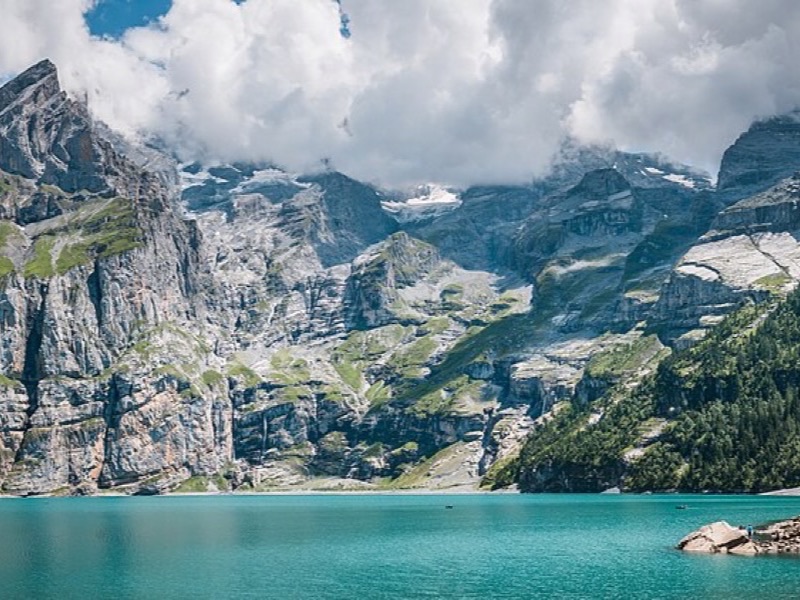
Switzerland has more than 1,500 lakes. The alpine lakes section covers 19 of them in detail — not the 19 most famous, but the 19 where we believe the boat journey, the shoreline walk or the approach by train is genuinely worth a reader's time and money. This includes Lake Geneva with the CGN paddle steamers, Lake Lucerne and the full Vierwaldstättersee navigation network, Lake Brienz and its connection to the Brienzer Rothorn steam railway, and less-visited lakes including Oeschinensee above Kandersteg, accessible only on foot or by chairlift and worth every step. Each lake entry includes a boat timetable summary valid for the current season, suggested shoreline walks with distance and elevation, and notes on the nearest rail connection.
Browse alpine lakes →Pillar 3
Art museums
The art museums section was built on one principle: that museum coverage in travel guides is almost always either too shallow to be useful or so deferential to the institution that it reads like a press release. Dominik Rüfli's approach is neither. The section covers eleven institutions, from the Kunsthaus Zürich — the largest art museum in Switzerland, now substantially expanded by the 2021 Chipperfield extension — to the Fondation Beyeler in Riehen, the Zentrum Paul Klee in Bern and the Kunstmuseum Basel. Each review covers the permanent collection honestly, addresses the quality of the current temporary programme, notes the admission price and any Swiss Travel Pass or museum card discount, and gives a practical assessment of how long a genuine visit requires. The reviews are updated twice yearly.
Browse art museums →Pillar 4
National parks and seasonal events
The fourth strand of the guide covers protected landscapes and the events that punctuate the Swiss calendar. The national parks section focuses on the Swiss National Park in the Engadine — the country's only true national park under the IUCN Category II designation — with detailed trail notes, wildlife guidance and transport access from Zernez. The seasonal events section covers Basel Fasnacht, the Montreux Jazz Festival, Zürich Sechseläuten and the Lugano Luglio Festivo, each with practical access notes for visitors arriving by train. We also cover old town walking routes in Stein am Rhein, Murten, Gruyères and Schaffhausen, and a dedicated family attractions guide for Swiss travel with children of different ages.
Browse national parks →Get in touch
Talk to the team
Whether you have a correction to flag, a route you think we have missed, or a trip you want help planning, we read every message sent to [email protected]. The contact page also has a form if you prefer a structured enquiry — including a field for selecting which travel pass you are considering, linked to our travel pass comparison guide.